Exploring the intricate relationship between climate change and global health unveils a complex web of challenges and opportunities. As temperatures rise and weather patterns shift, the impacts on human health become increasingly pronounced. This discussion delves into the various facets of this pressing issue, shedding light on the evolving landscape of public health in the face of a changing climate.
Climate change is not just an environmental concern; it's a critical health issue that demands our attention and action. By understanding the interplay between these two domains, we can pave the way for informed decisions and effective interventions to safeguard the well-being of populations worldwide.
Introduction to Climate Change and Global Health
Climate change refers to long-term changes in temperature, precipitation, and other atmospheric conditions on Earth. It is primarily caused by human activities such as burning fossil fuels, deforestation, and industrial processes, leading to an increase in greenhouse gases like carbon dioxide in the atmosphere.Global health, on the other hand, focuses on the health of populations worldwide, considering factors that transcend national boundaries.
It encompasses issues such as infectious diseases, maternal and child health, and access to healthcare services. The significance of global health lies in the interconnectedness of health outcomes across different regions and countries.The interconnection between climate change and global health is profound.
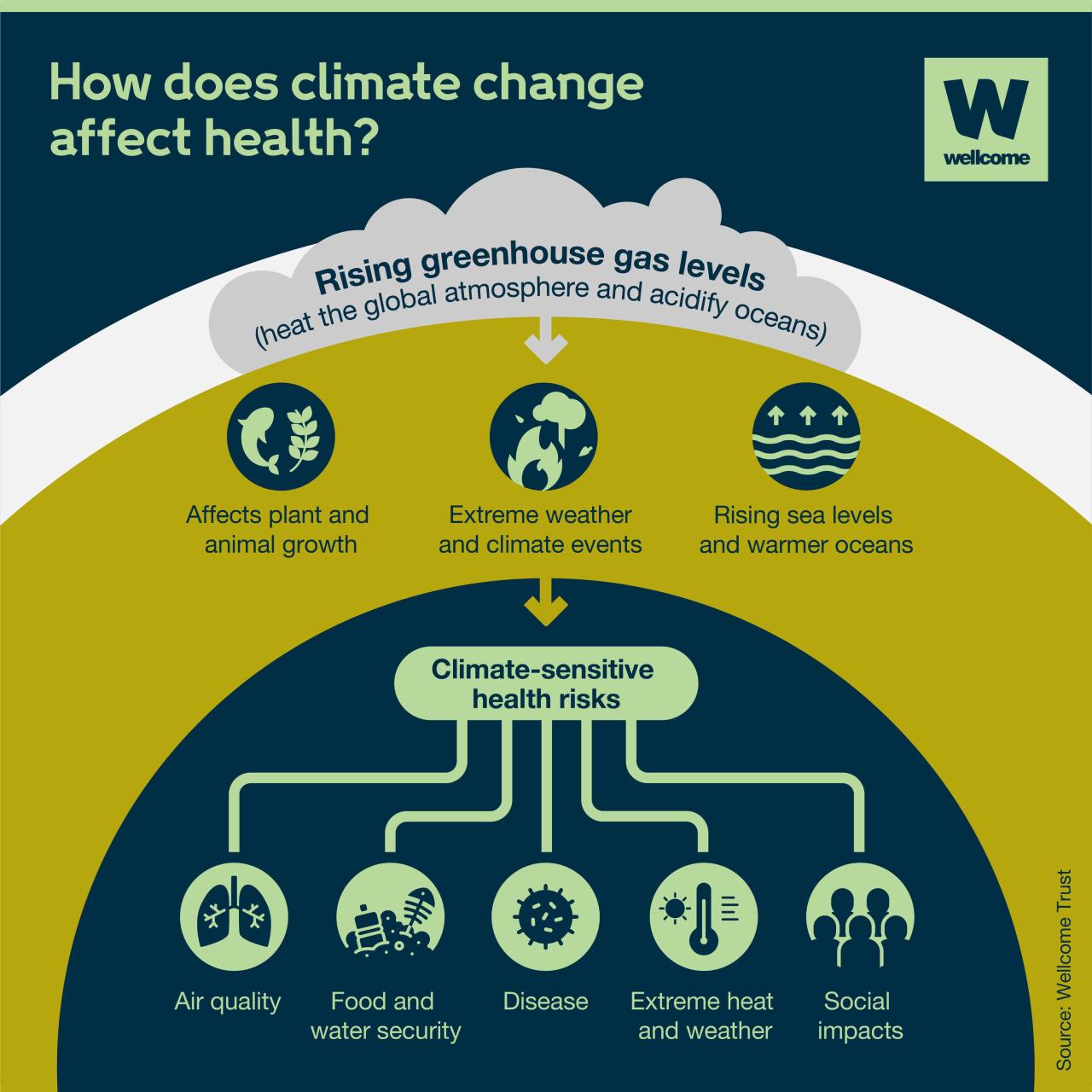
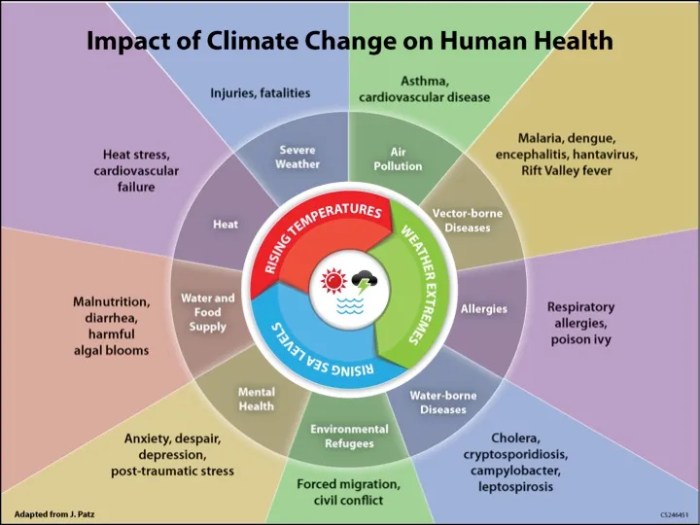
Climate change can directly impact human health through extreme weather events, changes in disease patterns, and food insecurity. For example, rising temperatures can lead to heat-related illnesses, while altered rainfall patterns can increase the spread of waterborne diseases. These effects are not limited to a specific region but can have global implications, highlighting the urgency of addressing climate change for the well-being of populations worldwide.
Impact of Climate Change on Disease Patterns
Climate change has a significant impact on disease patterns around the world, affecting the spread of infectious diseases, vector-borne diseases, and waterborne illnesses.
Spread of Infectious Diseases
Climate change can lead to the expansion of the range and transmission season of infectious diseases. Rising temperatures and changes in precipitation patterns can create more favorable conditions for pathogens to survive and spread. For example, warmer temperatures can increase the survival rates of certain disease-carrying insects, such as mosquitoes, leading to a higher risk of diseases like malaria and dengue fever in new regions.
Relationship Between Climate Change and Vector-Borne Diseases
Vector-borne diseases, such as Zika virus and Lyme disease, are highly influenced by climate change. Changes in temperature and humidity can impact the distribution and behavior of disease-carrying vectors like mosquitoes and ticks. As these vectors thrive in new areas, they can introduce diseases to populations that were previously unaffected.
The expansion of these diseases poses a major public health challenge.
Impact of Climate Change on Waterborne Illnesses
Climate change can also affect waterborne illnesses, as extreme weather events like floods and storms can contaminate water sources with pathogens. Increased temperatures can lead to the proliferation of harmful algal blooms in bodies of water, causing toxins to enter the water supply and pose health risks to those who consume contaminated water.
This can result in outbreaks of diseases like cholera and dysentery, particularly in vulnerable communities with limited access to clean water and sanitation facilities.
Air Quality and Respiratory Health
Climate change plays a significant role in influencing air quality, which in turn impacts respiratory health. Poor air quality can lead to a range of respiratory conditions, exacerbating existing health issues and causing new ones to develop.
Effects of Poor Air Quality on Respiratory Health
- Air pollution can irritate the respiratory system, leading to symptoms such as coughing, wheezing, and shortness of breath.
- Exposure to pollutants like particulate matter and ozone can worsen conditions such as asthma, bronchitis, and chronic obstructive pulmonary disease (COPD).
- Long-term exposure to poor air quality can increase the risk of respiratory infections and decrease lung function over time.
Examples of Respiratory Conditions Exacerbated by Climate Change
- Asthma: Climatic factors like increased pollen levels and extreme weather events can trigger asthma attacks in susceptible individuals.
- Respiratory Allergies: Changes in temperature and humidity levels can impact the distribution of allergens, leading to an increase in allergies and respiratory symptoms.
- Lung Cancer: Air pollution, including emissions from burning fossil fuels, is a known risk factor for lung cancer development.
Mental Health and Climate Change
Climate change not only affects physical health but also has significant impacts on mental well-being. The psychological toll of climate change can lead to increased stress, anxiety, depression, and even post-traumatic stress disorder. Individuals may experience feelings of helplessness, grief, and loss as they witness the destruction caused by extreme weather events and environmental degradation.
Psychological Impacts of Climate Change
- Increased stress and anxiety due to uncertainty about the future.
- Feelings of powerlessness and hopelessness in the face of environmental challenges.
- Loss of community and social connections due to displacement caused by natural disasters.
Mental Health Challenges Associated with Natural Disasters
- Exacerbation of pre-existing mental health conditions in the aftermath of disasters.
- Higher risk of developing new mental health issues such as PTSD and depression.
- Challenges accessing mental health services and support in disaster-affected areas.
Strategies to Address Mental Health Issues Related to Climate Change
- Implementing mental health support programs in communities vulnerable to climate change impacts.
- Integrating mental health services into disaster response and recovery efforts.
- Increasing awareness about the link between climate change and mental health to reduce stigma and promote resilience.
Vulnerable Populations and Climate Change
Climate change poses a significant threat to vulnerable populations worldwide, including children, the elderly, low-income communities, and those with pre-existing health conditions. These groups are particularly susceptible to the health impacts of a changing climate due to a variety of socioeconomic and environmental factors.
Groups Most Vulnerable to Climate Change Health Impacts
- Children: Children are more vulnerable to the health effects of climate change due to their developing immune systems and higher respiratory rates. They are at risk of diseases such as asthma and heat-related illnesses.
- Elderly: The elderly population is at increased risk of heat-related illnesses and cardiovascular diseases exacerbated by extreme weather events.
- Low-Income Communities: Socioeconomically disadvantaged communities often lack access to proper healthcare, clean water, and adequate housing, making them more susceptible to climate-related health hazards.
- Individuals with Pre-existing Health Conditions: Those with chronic illnesses such as diabetes, respiratory diseases, or cardiovascular conditions are at higher risk of health complications from climate change impacts.
Exacerbation of Health Disparities
Climate change exacerbates existing health disparities among different populations, widening the gap between those with resources and those without. Vulnerable communities face increased exposure to environmental hazards, limited access to healthcare services, and inadequate resources to cope with the health impacts of a changing climate.
Challenges in Adapting to Climate Change
- Resource Constraints: Vulnerable populations often lack the financial means to implement adaptive measures to protect their health, such as installing air conditioning or accessing medical care during extreme weather events.
- Information Access: Limited access to reliable information on climate change and its health impacts hinders the ability of vulnerable communities to make informed decisions about their health and safety.
- Infrastructure Vulnerability: Inadequate infrastructure in marginalized communities, such as poor drainage systems or substandard housing, increases the risk of health hazards during climate-related disasters.
Food Security and Nutrition
Climate change has a direct impact on food security and nutrition worldwide. As temperatures rise, extreme weather events become more frequent, leading to crop failures, water scarcity, and disruptions in food production and distribution systems. This, in turn, affects the availability, accessibility, and affordability of nutritious food, ultimately impacting the nutritional status of populations.
Impact on Agricultural Productivity
Climate change poses a significant threat to agricultural productivity by altering growing conditions for crops and livestock. Changes in temperature, precipitation patterns, and the frequency of extreme weather events can reduce crop yields, decrease the nutritional quality of food, and disrupt food supply chains.
This can lead to food shortages, price spikes, and increased risk of malnutrition among vulnerable populations.
Nutritional Implications of Food Shortages
Food shortages resulting from climate change-related disruptions in agriculture can have severe nutritional implications. Limited access to diverse and nutritious food can lead to micronutrient deficiencies, malnutrition, and food insecurity. Inadequate intake of essential nutrients can weaken immune systems, increase susceptibility to diseases, and hinder physical and cognitive development, particularly in children.
Adaptation and Mitigation Strategies
Climate change poses a significant threat to global health, necessitating the implementation of adaptation and mitigation strategies to safeguard populations around the world. These strategies are crucial in reducing the adverse effects of climate change on human health and well-being.
Adaptation Strategies
Adaptation strategies are essential for minimizing the negative impact of climate change on global health. These strategies involve measures to enhance resilience and preparedness in the face of changing environmental conditions. Some key adaptation strategies include:
- Improving early warning systems for extreme weather events to reduce health risks.
- Enhancing healthcare infrastructure to cope with increased demand during climate-related disasters.
- Implementing heat action plans to protect vulnerable populations from heat-related illnesses.
- Promoting sustainable urban planning to mitigate the urban heat island effect and improve air quality.
Adaptation strategies play a crucial role in building resilience and protecting communities from the health impacts of climate change.
Mitigation Efforts
Mitigation efforts focus on reducing greenhouse gas emissions and addressing the root causes of climate change to lessen its health consequences. These efforts are vital in preventing further exacerbation of global health challenges. Some key mitigation strategies include:
- Transitioning to renewable energy sources to reduce air pollution and combat respiratory diseases.
- Implementing policies to promote sustainable transportation and reduce emissions from vehicles.
- Supporting reforestation and conservation initiatives to sequester carbon and mitigate climate change effects.
- Encouraging sustainable agricultural practices to enhance food security and nutrition in the face of changing climate patterns.
Mitigation efforts are essential in addressing the underlying causes of climate change and protecting public health for future generations.
International Cooperation
International cooperation plays a critical role in addressing the complex intersection of climate change and global health. By working together on a global scale, countries can collaborate on implementing effective adaptation and mitigation strategies to protect populations worldwide. Some key aspects of international cooperation include:
- Sharing best practices and knowledge to enhance climate resilience and health outcomes.
- Supporting developing countries in building capacity to adapt to climate change and mitigate its health impacts.
- Establishing international agreements and frameworks to promote sustainable development and climate action.
- Collaborating on research and innovation to develop new technologies for climate resilience and health protection.
International cooperation is essential for fostering a collective response to the challenges posed by climate change and safeguarding global health for present and future generations.
Final Summary
In conclusion, the intricate dance between climate change and global health underscores the urgency of adopting sustainable practices and policies. As we navigate the challenges posed by a warming planet, it is imperative to prioritize the health and resilience of communities around the globe.
By fostering collaboration and innovation, we can forge a path towards a healthier future for generations to come.
FAQ
How can climate change impact mental health?
Climate change can lead to increased stress, anxiety, and depression due to extreme weather events, displacement, and loss of livelihoods.
Which populations are most vulnerable to the health impacts of climate change?
Vulnerable populations include children, the elderly, low-income communities, and individuals with pre-existing health conditions.
What are some adaptation strategies to protect global health from the impacts of climate change?
Adaptation strategies include improving healthcare infrastructure, enhancing disease surveillance systems, and promoting community resilience.